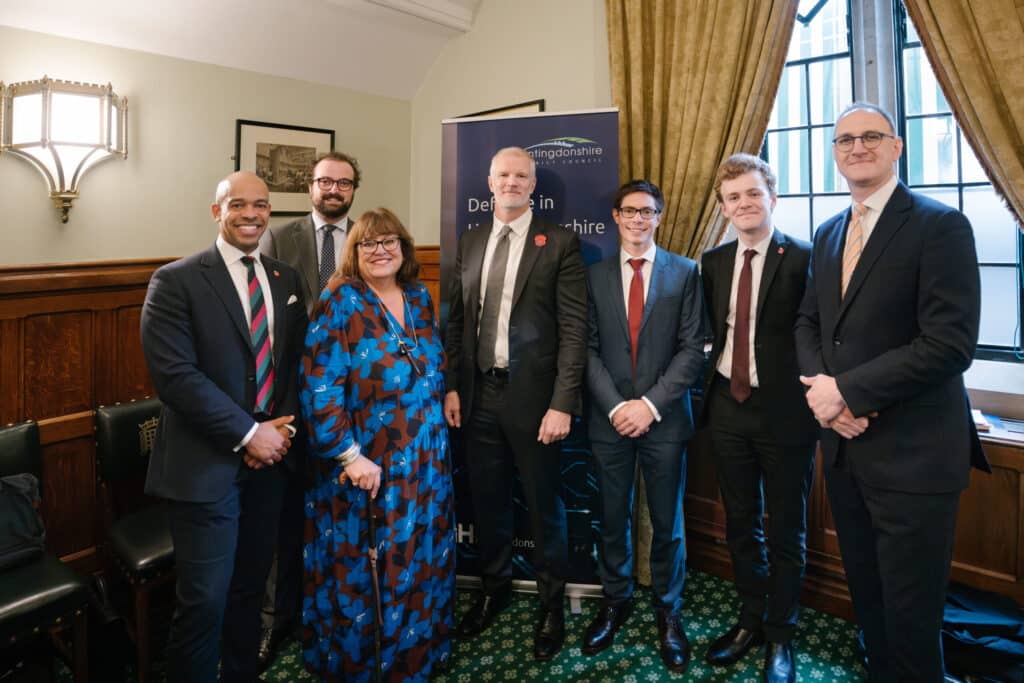
“We need to make Cambridge the most liveable city in Europe” Innovation Corridor correspondent Oliver Deed sits down with Peter Freeman, Chair of the Cambridge Growth Company, to talk all things growth and investment.
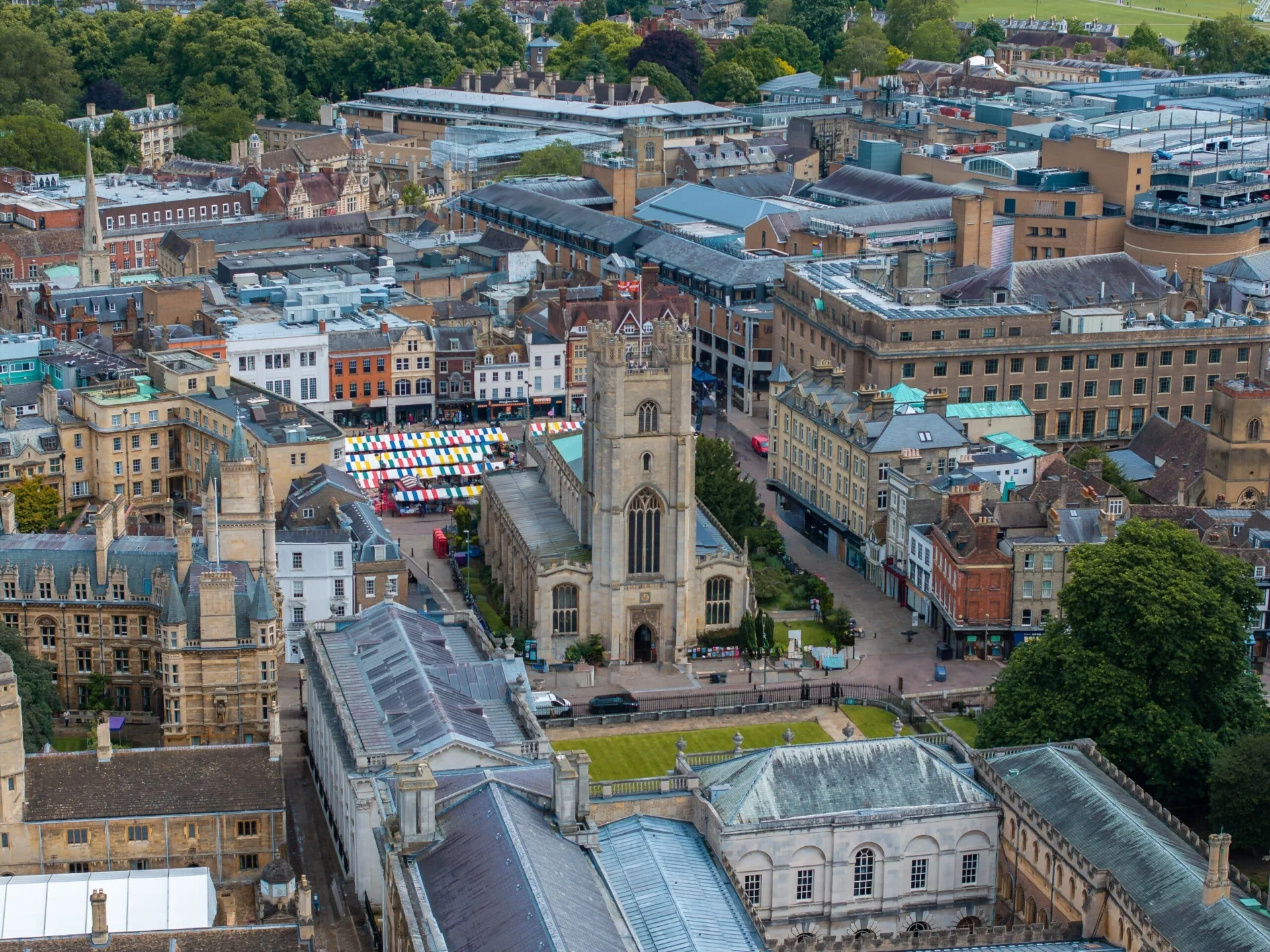
Cambridge is a city with a global reputation. With over 800 years of academic and scientific history behind it, more than 120 Nobel Prize winners to its name, and some of the country’s leading companies calling it home, this important anchor within the Innovation Corridor is a key driver of growth for UK PLC.
But that rich heritage, and popularity comes with several challenges. As Peter Freeman, Chair of the Cambridge Growth Company acknowledges in our sit-down, the city is at risk of becoming a “victim of its own success” and addressing that is at the heart of Peter and the new growth company’s mission.
Shortly before the last General Election, the then Sunak government established the Cambridge Growth Company, following a series of Cambridge-focused announcements in the proceeding months. With Freeman installed shortly afterwards, and confirmed by this government in October 2024 he and his team were tasked with challenges he identifies as “poor internal transport, limited housing affordability, water supply issues, and pockets of deprivation that sit uneasily alongside the city’s global wealth.”
The Growth Company, he explains, has been set up to take a 25-year view that transcends election cycles and short-term funding priorities. Its role is to connect local authorities with central government departments to secure the investment, infrastructure and policy changes needed to keep the city thriving. “If we get it right,” Freeman said, “Cambridge can be the most liveable city in Europe.”
Whilst early days, the Growth Company has just published a new paper entitled “A place of national and global significant” with a forward from Housing and Planning Minister Matthew Pennycook MP, alongside an announcement of £400m of new funding into new homes, infrastructure, business and laboratory space, and a programme of water-saving measures. It will prepare a plan for long-term ambitious growth, working closely with local partners and building on the area’s emerging local plan, with a focus on the infrastructure necessary to enable employment spaces and the homes, green spaces and social facilities required to support high quality placemaking, and the company will be a growing presence at set-piece investment and placemaking events.
I ask Freeman why Cambridge still constituted a place to invest in. “If you’re a business that can locate anywhere in the world, Cambridge is one of the few places that stands out,” Freeman said. “You’ve got world-class institutions including Addenbrooke’s, AstraZeneca’s global research headquarters, the Laboratory of Molecular Biology, all within walking distance of each other. It’s an ecosystem that produces ideas, products, and jobs.”
Cambridge, he added, offers the right language, time zone, legal system, and talent, plus something harder to measure. “There’s just a hell of a lot of smart people here,” he says with enthusiasm. “And that tradition of innovation isn’t going anywhere.”
He describes Cambridge’s innovation intensity, constituting the level of research and invention relative to its size, as “off the scale,” even compared with Silicon Valley. “Because it’s compact, you get extraordinary cross-fertilisation between people and disciplines,” he said. “You’re never far from your next collaborator. In Cambridge, innovation happens at 100 yards. People bump into each other, ideas collide, and things get built.”
That means the city remains a stand-out global destination for inward investment.
We then move on to where he thinks the Innovation Corridor fits in all of this, and how members should work together to achieve shared objectives. “We want Cambridge to succeed, but success is stronger if the whole corridor thrives. We should welcome progress in Oxford, Milton Keynes or Harlow, because together we send a message that Britain is open for business.” He sees share messaging on infrastructure and policy as essential, from securing East-West Rail to pushing for new funding models such as tax-increment financing. “Growth in these areas will contribute directly to the country’s prosperity,” he said. “The Treasury needs to understand that.”
We draw the interview to a conclusion at that point and I leave with a sense that Freeman and his team have inexhaustible optimism for the future of Cambridge. They are aware of the challenges the city faces, and tackling them head on, whilst remaining crystal clear about the strong existing case for both private and public sector investment. They also have an emerging vision for where the city is going, and how partners like the Innovation Corridor can help them get to where they need to be.
It feels like the city’s global reputation is in safe hands.