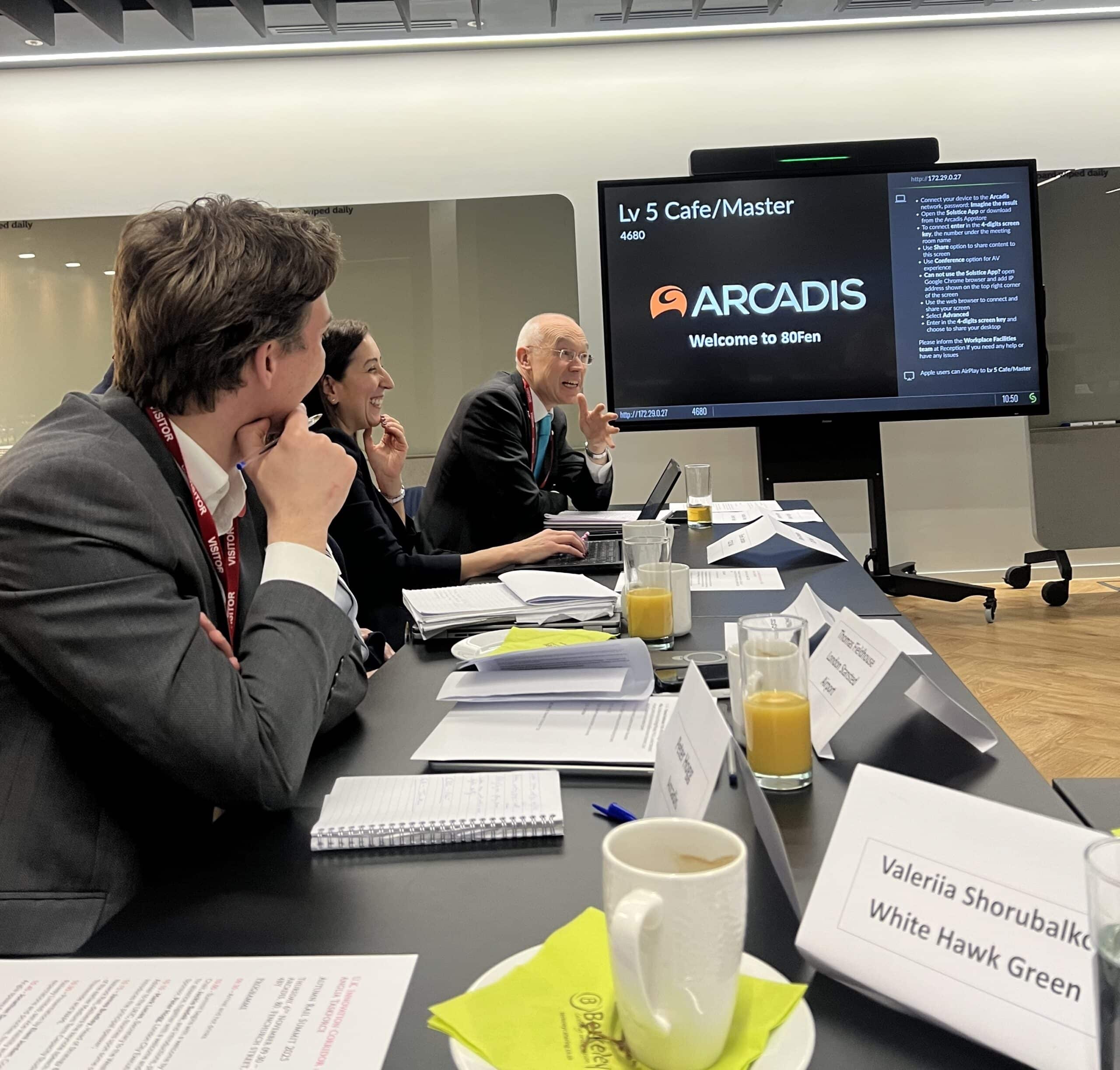
On 6th November, the UK Innovation Corridor, in partnership with Arcadis, assembled leaders from the world of transport to discuss priorities in the region, the challenges currently inhibiting growth, and how stakeholders can maximise opportunities for investment and growth.
There were wide ranging discussions, and we welcomed contributions from Arcadis, Network Rail, C2C Railways, Greater Anglia, England’s Economic Heartland, Transport East, and London Stansted Airport. Among the topics covered were:
- The West Anglian Mainline Study and imminent review. Network Rail’s long-term strategy for station capacity at Tottenham Hale and Cambridge, faster line speeds, new rail – freight opportunities, better electrical power supply and integration with Transport for London, and East – West Rail
- Proposed reconfigurations to Ely and Haughley Junctions, which are critical for prosperity and keeping more trucks off the road network in the corridor and the East of England, by easing these rail bottlenecks
- The investment needed to support London Stansted Airport as it looks to increase the number of passengers it serves and expanding its terminal
- How both public and private sector investment models could be used to support asks in the region.
We are justly proud of the fact that Greater Anglia and c2c, who operate in our Corridor, are consistently amongst the highest performing train operating companies in the whole of the U.K. In addition, both operators recently introduced new, state-of-the-art EMU passenger trains, built by Stadler in Switzerland and Alstom in England, onto all three mainlines.
West Anglia Taskforce member, and Transport Adviser to the Innovation Corridor, Mark Lucas, was crucial in pulling the group together. He provided critical insight into the lessons that could be learned from rail innovation on the European continent. This included notes on the impact the ambitious, ‘Stuttgart 21’ main city station-tunnelling project will have in the city, known for its advanced manufacturing output, which will dramatically reduce journey times to and from the airport.
Progress will continue to be made on this throughout 2026, in the same spirit of collaboration and optimism on show at the Rail Summit.